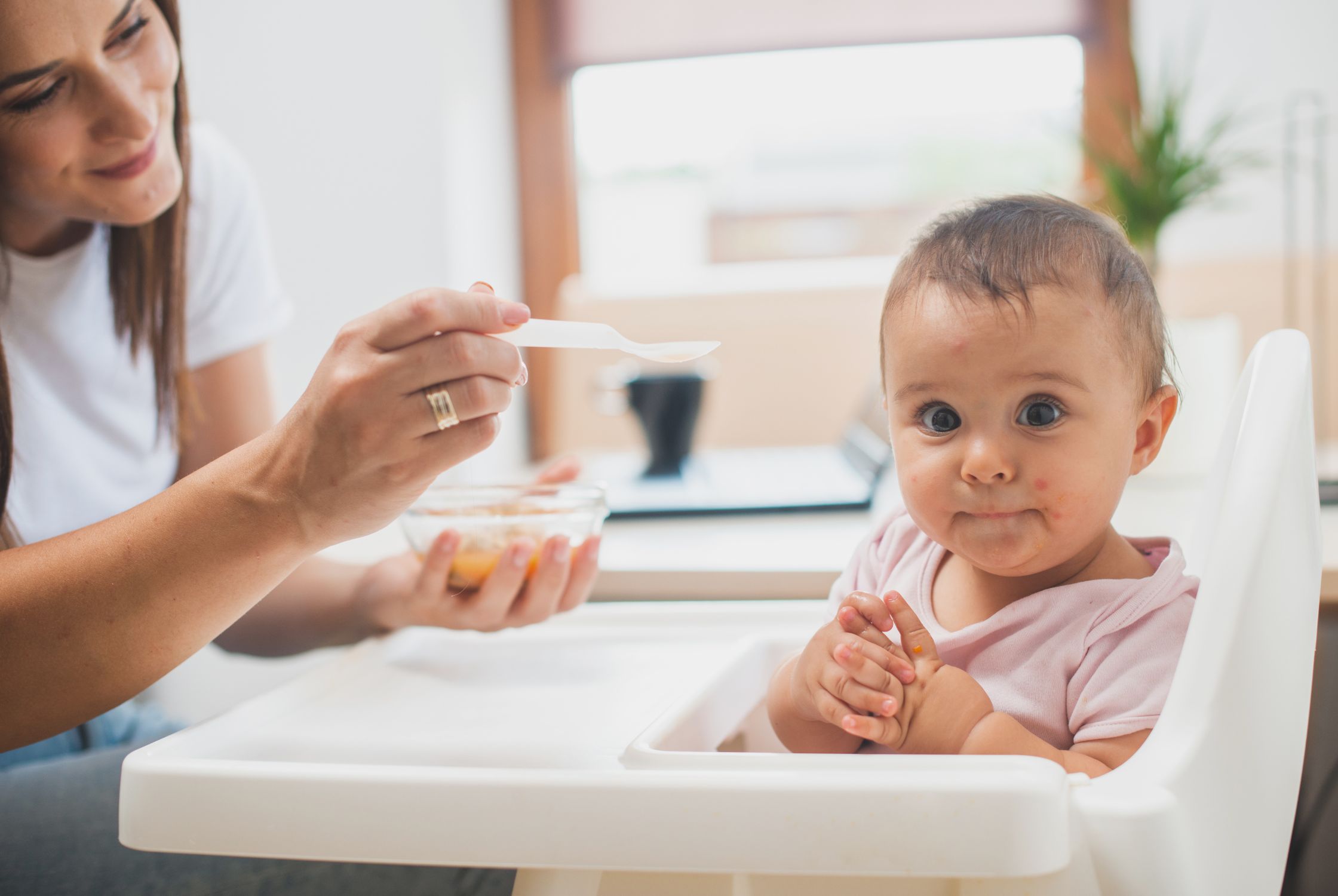


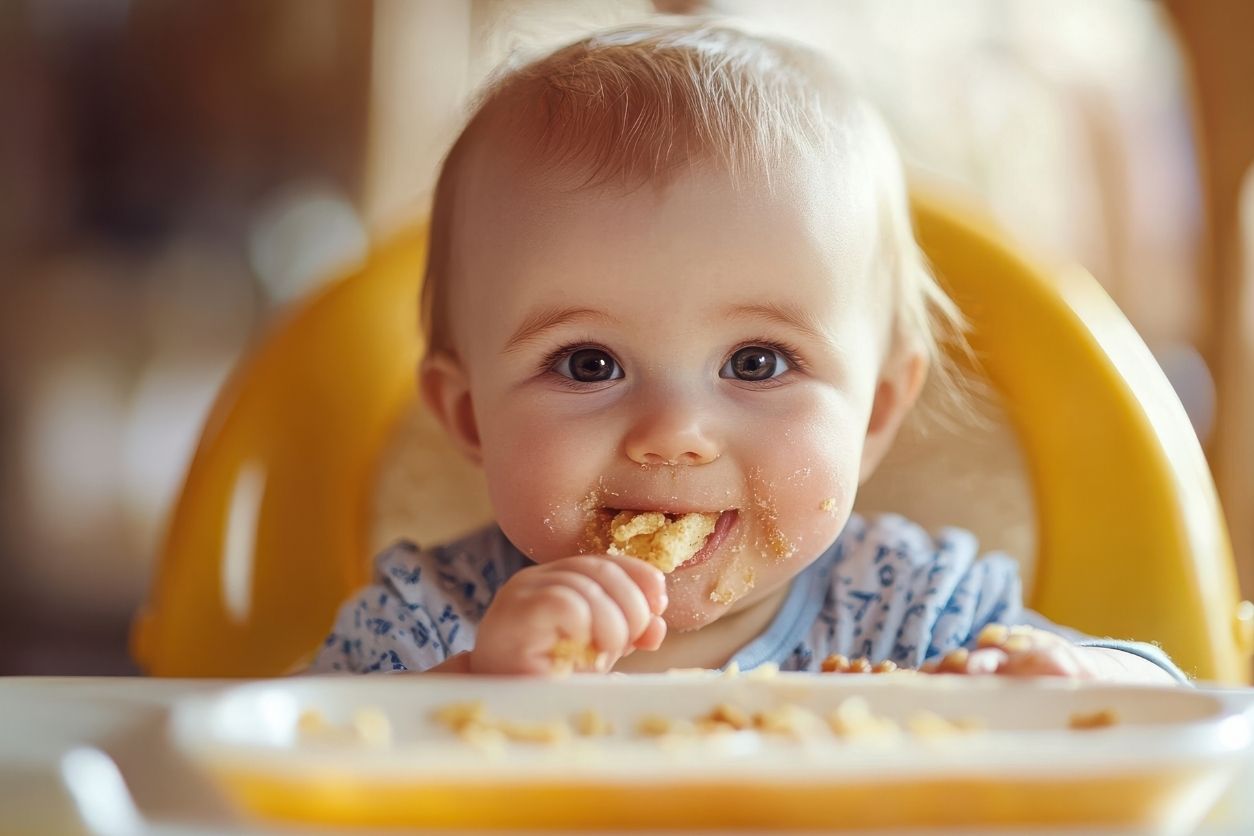
Around 6 months of age (give or take a few weeks), many babies start showing signs that they’re ready for more than breastmilk or formula. But with all the conflicting advice online, it’s completely normal to feel unsure about what actually matters when it comes to feeding your baby.
You might be wondering:
Here’s your gentle reminder: there’s no single “perfect” way to start solids.
After supporting countless families — and starting solids with my own three kids — I’ve learned that every baby brings their own pace and personality to the table. You know your little one best. Small, consistent steps rooted in safety, trust, connection, and responsive feeding make all the difference.
In this post, I’ll walk you through what to consider as you begin solids with your baby, from readiness cues to first foods and everything in between.
If you want a simple, parent-friendly overview, you can also download Sarah Remmer’s free Starting Solids Guide for extra support.
Timing with starting solids is based on signs of readiness, not just age. In Canada, we have a 4-month well-baby visit and then not another until 6 months, so it’s not unheard of to get the green light from your doctor to start solids at 4 months. However, most babies aren’t truly ready until closer to 6 months because readiness depends on developmental skills, not their age.
Look for these key signs your baby is ready for solids (6 months is typical, but not a rule):
Parent tip: If your baby was born prematurely, talk to your healthcare provider; readiness may align closer to their corrected age.
We start offering solid foods around the six-month mark for two key reasons:
These two factors come together right around six months, making it the ideal time to begin introducing solids.
Before six months, babies’ mouths are designed primarily for sucking, not chewing. Their tongue fills much of the oral cavity, which helps with compression and suction during breastfeeding or bottle-feeding, but it makes chewing or moving food around the mouth difficult.
Around six months, several important developmental changes happen:
Waiting until these oral–motor skills emerge helps babies eat more comfortably and reduces gagging, choking risk, and frustration. It also ensures eating is a positive, developmentally appropriate experience.
Six months is when development and nutrition meet. Babies are ready to chew, swallow, explore new textures, and start learning about flavours. While breastmilk or formula still does the heavy lifting, their need for iron and a few key nutrients increases. Understanding both their readiness cues and their changing needs helps you approach this milestone with confidence.
Here’s why:
Iron deficiency is difficult to detect early and can lead to:
Because of this, offering iron-rich foods early and often is essential when babies begin solids.
For a deeper dive into the importance of iron (plus practical examples of iron-rich first foods), you can explore the Top 10 Iron-Rich Foods for Babies Starting Solids.

In Canada, experts recommend starting solids with iron-rich foods — early and often — especially for babies aged 6–12 months. While iron needs increase from 0.27mg per day from 0-6 months to 11mg per day from 7-12 months, this change doesn’t happen overnight.
Learning to eat is a skill and it will take some time and practice for your little one to learn to like iron-rich foods like meat and/or cereals. Start with offering iron-rich foods at least twice a day, beginning at 6 months once your baby is accepting solids and increasing to 3 times a day when your baby is 8-12 months.
Great first foods include:
After iron foods, introduce a wide variety of:
*These foods are also common allergens
You don’t need to introduce foods in a specific order — variety matters more than sequence. That said, we place our early priorities on two key areas: iron-rich foods and allergens. Let’s get into it!
When it comes to food allergens, current guidance recommends introducing priority allergens, including peanuts, tree nuts, mustard, milk, eggs, fish, shellfish, sesame, soy, and wheat, as soon as your baby is developmentally ready for solids. Early introduction can help lower the risk of developing food allergies.
For babies at higher risk (those with eczema, an existing food allergy, or an immediate family member with food allergies, eczema, or asthma), early introduction is especially important. In some cases, it may even be recommended slightly earlier than six months (but not before four months) under professional guidance.
How to introduce allergens safely:
Introducing an allergen once and then rarely offering it again may actually increase the risk of developing an allergy, so ongoing exposure really matters.
If you want a clear, step-by-step plan, check out our detailed guide on how to introduce allergens to your baby. And if you’re looking for personalized support, our dietitian team at Centred Nutrition Collective can always help you create an individualized introduction plan.
We also understand the emotional load that food allergies can place on families. If you’re navigating fear, uncertainty, or a new diagnosis, you may find comfort in our post on supporting kids and parents in coping with food allergies.
Continue offering breastmilk or formula on demand throughout the first year; this remains your baby’s main source of nutrition. Solids are added alongside milk feeds, beginning around 6 months, when your baby shows readiness.
Learning to eat is a brand-new skill that takes time, practice, and patience. Start slow, keep portions small, and let your baby guide the pace.
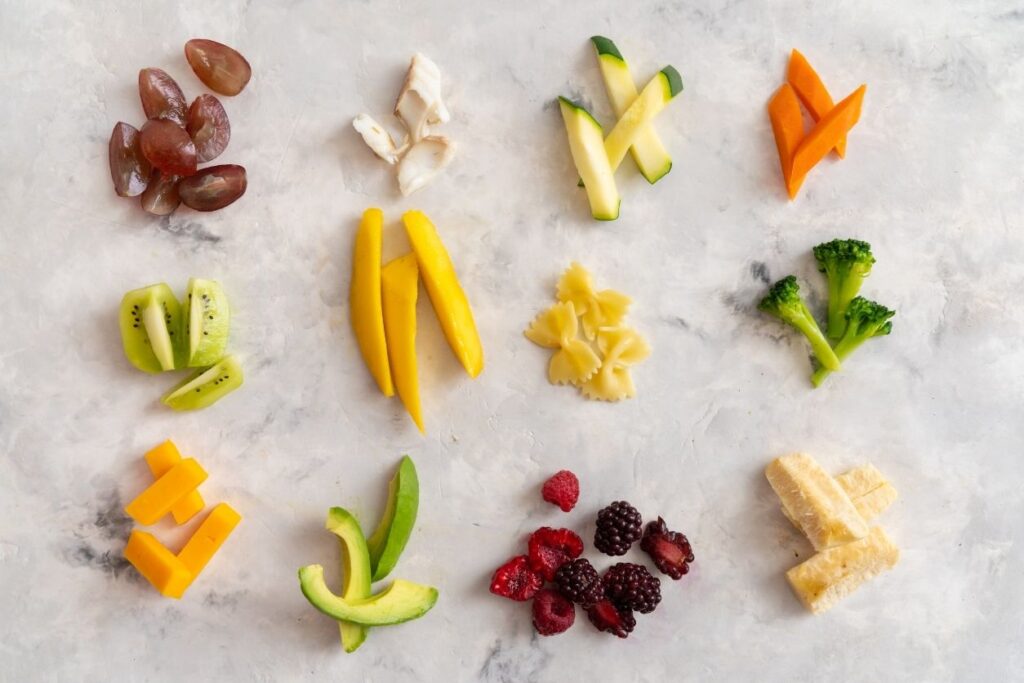
Safety is essential when starting solids, whether you choose to spoon-feed, offer whole pieces of food using baby-led weaning, or using a combination of both. Offering the right textures at the right time supports oral–motor development and helps babies learn to chew safely.
In fact, delaying the introduction of lumpy textures beyond 9 months is linked to more feeding challenges later on in older children, including increased picky eating and lower intake of nutritious foods like fruits and vegetables.
If you’d like a deeper look at the complex, multifaceted reasons picky eating develops, we have a dedicated post that explores these factors in detail.
When we talk about safety, we’re primarily looking at ways to reduce the risk of choking. Always make sure your baby is sitting upright (never reclined), well-rested, calm, and alert during meals. And most importantly, always supervise your baby while they’re eating. Certain foods pose a higher choking risk, especially those that are small, round, slippery, sticky, or firm — and should be avoided or modified to be safe.
Focus instead on foods that are safe textures:
And remember: Babies learn through play. Exploring, squishing, smearing, smelling, and tasting helps them understand food. How a food feels in their hands mimics how it feels in their mouth, while smells influence flavour. Mess is part of development — embrace it!
There is no universal amount a baby “should” eat — follow your baby’s cues. Here’s a helpful guide:
Focus on:
Responsive feeding means tuning into your baby’s cues, responding promptly, and allowing your child to lead the feeding process. This approach supports autonomy, builds confidence, and helps your baby develop trust in their hunger and fullness signals — laying the foundation for a positive lifelong relationship with food.
Instead of thinking only in terms of Baby-Led Weaning (whole foods) vs. purees, consider Baby Led Feeding — a flexible, child-led approach that adapts to your baby’s unique developmental stage. This can include a combination of both finger foods and purees depending on your baby’s skills.
In responsive feeding, we use a framework developed by feeding therapist Ellyn Satter called the Division of Responsibility (sDOR). This framework supports autonomy, reduces pressure, and builds trust.
In sDOR, the caregiver decides:
The child decides:
As your baby learns to eat, certain foods should be avoided for safety and developmental readiness. Here’s what to keep off the menu in the first year — and why:
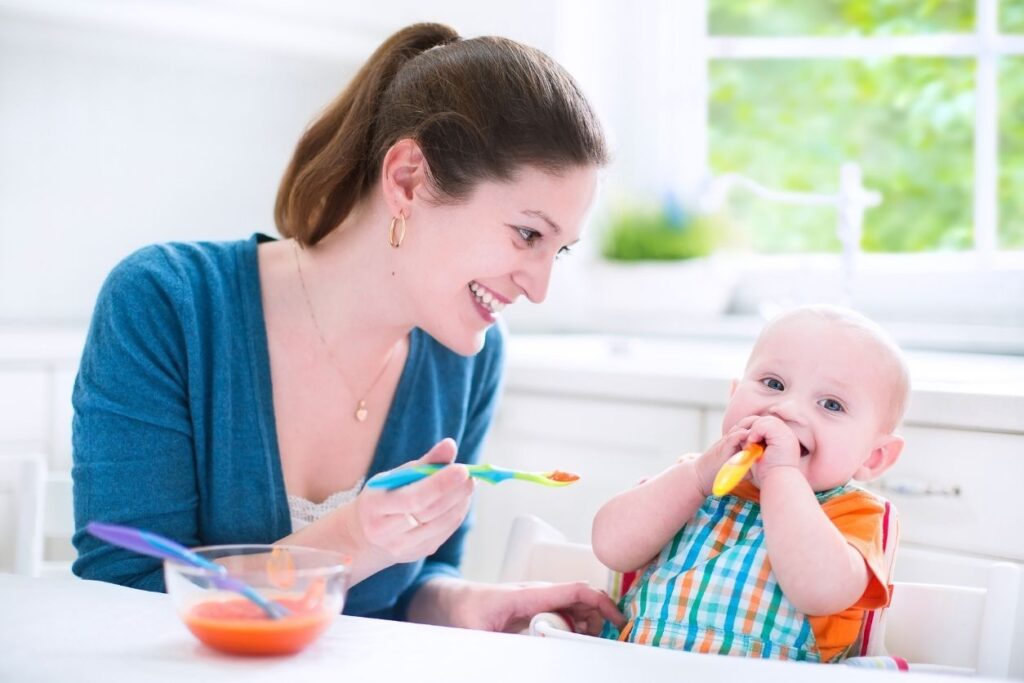
A peaceful, low-pressure feeding environment supports learning and reduces future picky eating.
Tips for joyful mealtimes:
A peaceful, low-pressure feeding environment supports learning, curiousity, and long-term positive eating habits. When mealtimes feel calm and connected, babies are more willing to explore new foods, build confidence, and develop skills that help reduce picky eating later on.
You are your baby’s biggest role model. Oftentimes, our kids just want to eat what we are eating. Seeing you eat the same meal (or a version of it) teaches them what eating looks like and builds trust. Family meals are also a great opportunity for non-pressure food exposure!
Babies eat best when they can focus on the food, the sensory experience, and the social interaction. Screens have a time and place but they can provide distractions that interfere with a child’s internal cues. They can also make mealtimes overstimulating and we can miss out on the opportunity to build connection.
A combination of self-feeding and responsive spoon-feeding promotes independence, fine motor skills, and confidence. Babies don’t need to choose one method; they benefit from experiencing both. Consider offering some food on a spoon (they can self-feed this way too) and some food on the tray.
Food on hands, cheeks, hair, the floor, and the highchair tray is all part of the process. Touching, squishing, and smearing all support acceptance of new foods.
Not every meal will be calm — that’s real life. But the more we can move away from coaxing, bargaining, or “just one more bite,” the more inviting mealtimes become. Pressure of any kind (positive or negative) can create stress and make children less interested in coming to the table or the high chair. A calm, low-pressure atmosphere helps babies stay curious, confident, and connected during meals.
It’s normal for babies to touch, lick, or play with food before actually eating it. These early interactions build familiarity — an important step in learning to enjoy new foods.
Totally normal. Interest in solids comes and goes. If your baby turns away or seems done, pause and try again later. Early eating is a new skill; some babies need extra time to explore and warm up. Follow their cues and keep mealtimes relaxed.
Both are great, and most families use a mix. Some babies start with purees, some prefer self-feeding, and many do both. What matters most is safety, appropriate textures, and offering iron-rich foods early and often. Choose what fits your baby’s skills and your comfort level.
Once solids start (around six months), offer small sips of water with meals up to about 4 oz per day. Use a straw or open cup for skill-building. Water is for practice, not replacing milk feeds. Bowel movements may change as solids increase; water can help ease the transition.
Gagging in babies is very common and helps babies learn to handle new textures. It can look dramatic but is usually harmless. Choking is different and requires immediate action. Always supervise meals, offer safe textures, and sit your baby upright. An infant CPR/first aid course can boost confidence.
As a Registered Dietitian getting support for any feeding challenges that you may encounter earlier rather than later will lead to greater chance of success with feeding and your baby’s acceptance of foods. Seek support from a pediatric dietitian or feeding specialist if:
Starting solids is a big milestone, but it doesn’t have to feel overwhelming. When you wait for readiness signs, offer iron-rich foods, introduce allergens early, explore a variety of textures, and follow your baby’s cues, you’re laying the foundation for curious, confident eating.
Trust yourself — you know your baby best. And if you’d like individualized guidance, our pediatric dietitians at Centred Nutrition Collective are here to support you.

