


If your child is scared to poop, hiding when they need to go, or turning bathroom time into a daily standoff, you are not alone. As a dietitian mom of a child who has struggled with constipation, I’ve been in the toilet trenches too. It can be stressful and emotionally draining.
Constipation is one of the most common reasons children see a doctor, and as a dietitian, something we support families with as well. It can show up at different ages from the start of solids to the teen years. With many clients constipation is a puzzle with many different pieces.
The good news is that many kids improve with a gentle, steady approach that supports both digestion and regulation. In this blog post, we are focusing on food-first strategies, low-pressure routines, and practical changes that actually fit real family life. And because some cases need more than nutrition changes, we will also cover when it is time to reach out to your child’s doctor.
Schedule a free consult with one of our registered dietitians!
Constipation is not just “not going every day.” Constipation is a condition where a person has infrequent bowel movements or difficulty passing stool, often because the stool becomes hard, dry, and difficult to pass, and can be further complicated when a child is withholding.
Normal bowel patterns vary a lot from child to child. What matters more is the consistency of your child’s stool. In general, normal stool should be soft and easy to pass; for many children that may mean anywhere from one to three bowel movements a day, or even one every two to three days. For babies, grunting and turning red alone does not necessarily mean constipation. Hard or painful stool is the bigger clue.
Signs your child may be constipated include
Constipation can sometimes be connected to gut health, but it is not always the whole picture. Gut health is all about how well your child’s digestive system is working, including the balance of bacteria and other microorganisms in their intestines. When things are a little off, it can affect digestion and make pooping feel more difficult for some kids. If gut health is something you’ve been curious about, we share more in this post on how to improve your child’s gut health.

In kids, constipation is usually multi-factorial. A very common pattern goes like this: a child has one painful poop, starts holding it in so they do not have to feel that again, the stool sits longer in the colon, more water gets absorbed, and the next poop is even harder and more painful and it can progress and worsen including stretching the colon and requiring larger stools to create the sensation to go. That is why constipation can become such a stubborn cycle.
Common triggers include withholding after a painful poop, potty training, starting school, avoiding public bathrooms, travel, big routine changes, starting solids, low fluid intake, limited food variety, and certain medications or supplements such as iron. Let’s not forget the impact of emotional regulation and how it may impact toileting as well. In other words, fibre matters, but it is rarely the whole story.
That is also why the standard advice to “just give more fibre” often falls flat. Kids do need enough fibre and fluids, but pushing fibre, fluids, or probiotics far beyond usual needs is not a magic fix once constipation is established, especially if a child is already withholding or impacted. Make note that there are two things that children have control of in their life: eating and toileting. When a child has significant change or trauma in their life, it is often that one of the two is affected, or both.
A simple way to think about fibre is that some types help soften stool, while others help move it along. Foods like oats, beans, lentils, chia seeds, fruit, and vegetables offer a mix of both, so you do not need to get caught up in the details at every meal.
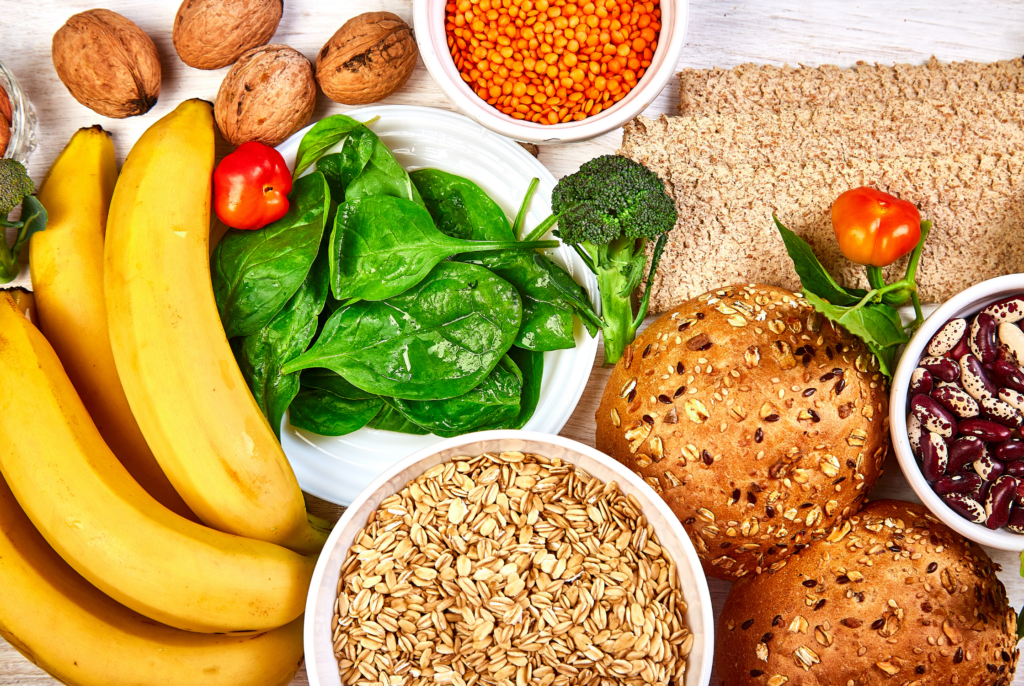
What matters most is going slowly. Adding too much fibre too quickly can leave kids feeling gassy, bloated, and even less interested in eating those foods again. A gentler approach tends to work better. You might add ground flax to toast, stir oats into yogurt or smoothies, mix chia into oatmeal, serve berries with breakfast, swap in whole grain bread, or include foods like pears, sweet potatoes, lentils, or avocado more often. For babies 6 to 12 months who have started solids, focus on baby-safe options like oats, iron-fortified cereal, fruits, vegetables, beans, peas, and lentils rather than aiming for a specific fibre number.
The goal is not to overhaul everything overnight. It is to build on foods your child already accepts and make small changes over time. And if that feels easier said than done because your child is selective with food, you are not alone. Adding fibre is one thing, but getting a child to eat it can be a whole different challenge. You can learn more in our post on what causes picky eating.
Hydration helps fibre do its job. When there is not enough fluid in the system, stool gets drier, firmer, and harder to pass. Water matters, but it is not the only fluid that counts. Depending on age, helpful fluids can include breastmilk, formula, milk, water, smoothies, soups, and water-rich fruits, really anything that is liquid at room temperature, including ice cream, jello, broth, and popsicles.
A few practical ways to make this easier: keep a water bottle visible, offer fluids with snacks instead of only at meals, and serve milk consistently with meals if your child drinks it. For babies 6 to 12 months, breastmilk or formula still does the heavy lifting; small sips of water from a cup (no more than 4oz) and, in some cases, small amounts of apple, pear, or prune juice may be used, but they should not replace regular feeds and should be considered more like a medication.
This is not the place for moralizing drinks or creating another food rule. Consider creative ways to make water and fluids more appealing because our goal is to help stool stay soft and comfortable.
In practice, I also look at overall meal satisfaction. Many constipated kids end up eating very dry, beige meals on repeat: crackers, toast, dry cereal, cheese, and not much else. Bringing in foods like nut butters, avocado, olive oil, yogurt, and seeds can help meals feel more balanced, more satisfying, and easier to build around. This is not because fat is a miracle cure. It is because an all-around more balanced eating pattern is usually more sustainable than forcing foods that will make a child miserable.
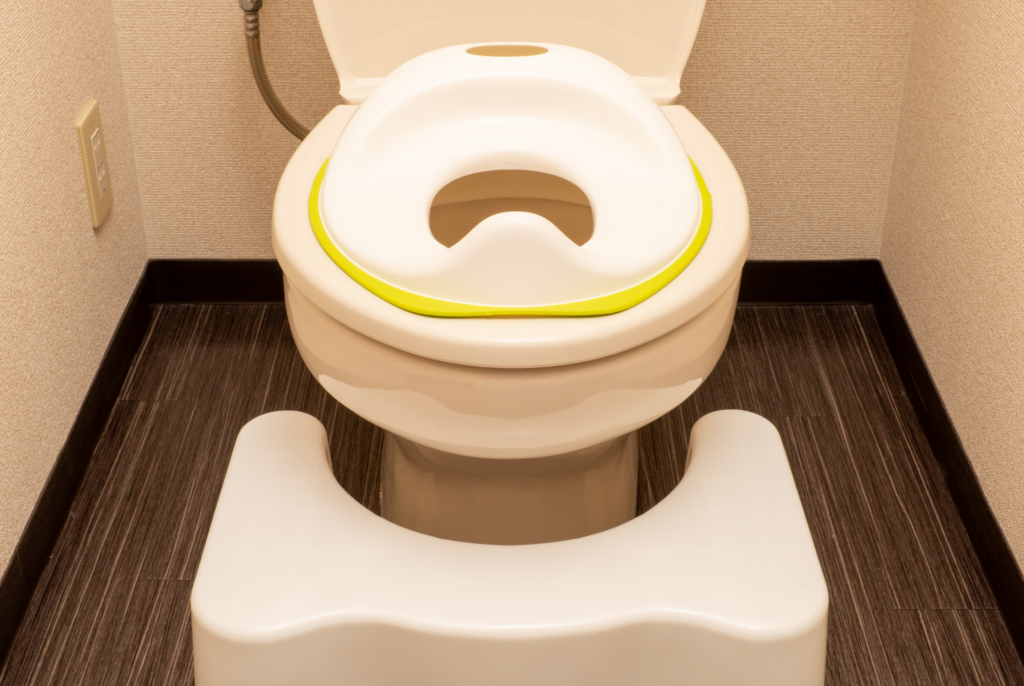
This matters more than most parents realize. Many children do best with a short, relaxed toilet sit after meals, when the body is naturally more ready to poop. A practical starting point is 1 minute per age to about 15 to 20 minutes after breakfast or another meal. Feet should be supported on a stool (think squatty potty) so the knees are slightly higher than the hips, and the child can lean forward a little rather than perch and strain. Positioning can have a large impact on success for some kids. Just as important: do not rush it.
Keep the tone neutral. No lectures. No pleading. No “just try harder.” Having activities that your child only gets access to when in the bathroom like books, a quiet activity, stickers, or even tech as a part of a calm routine can help. The goal is to make the bathroom feel safe and predictable, not emotionally loaded.
Pressure tends to backfire. When kids feel pushed, bribed, watched, or forced to eat, they often dig in their heels. That can be especially tricky when you are trying to help a constipated child eat fibre-containing foods more regularly. Forcing prunes, bargaining over bites, or turning “poop foods” into a battle can make meals feel stressful and make those foods even less appealing next time.
This is where the Division of Responsibility in feeding can be so helpful. Your job is to decide what, when, and where food is offered. Your child’s job is to decide whether to eat and how much. That approach can lower pressure, reduce mealtime tension, and help protect your child’s relationship with food while you support their digestion. If picky eating is part of the picture, our ultimate guide to picky eating is a great place to start.
Some do help. Some are overhyped. Most work best as part of a bigger plan.
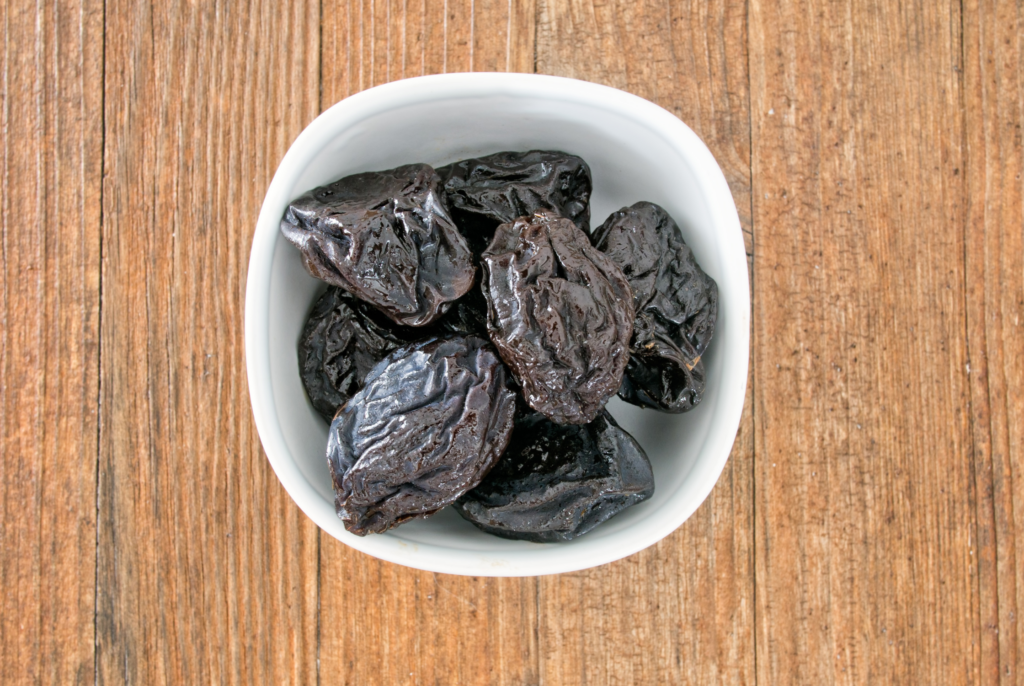
These are some of the more useful food-based tools because sorbitol-containing fruits and juices can increase stool water and help stool pass more comfortably. For babies and toddlers, this is one reason pear, apple, and prune products often come up in pediatric guidance.
Evidence is still mixed, and current reviews do not support probiotics as a stand-alone treatment for functional constipation in children. That does not mean they are always useless; it means they are not the reliable first-line fix many marketing claims make them out to be.
Sometimes they are helpful, especially when a child truly is not meeting fibre needs or regular foods are hard to work with. But they are not automatically better than food, and the evidence is not strong enough to treat them like a universal answer. Food-first is still a sensible place to begin, with supplements considered on a case-by-case basis.
Sometimes they are necessary, and there is no shame in that. In fact, several pediatric guidelines make it clear that when a child is already significantly backed up, diet and fluids alone may not be enough to break down hard stool. Polyethylene glycol-based laxatives are commonly used first-line in medical care.
The first line approach should include strategies that make it more comfortable for the child to eliminate their bowels and using a laxative to help remove the build up, and prevent bowel movements from hurting while we work on incorporating more food based strategies and more fibre and fluids into a child’s diet. Starting a laxative is not a failure. That is treatment. It can be started with a plan to also wean off of it.
Please get medical support sooner rather than later if your child has blood in the stool that is not clearly from a small fissure, significant belly bloating or severe abdominal pain, vomiting, weight loss, poor growth, constipation that is not improving with home strategies, or symptoms that began very early in life. For babies under 1, lack of improvement deserves quicker follow-up.
I would also encourage families to reach out early when withholding has become chronic, stools are very painful, or there is regular soiling. Prompt treatment can help prevent the fear-withholding cycle from becoming a longer-term problem.
Functional constipation is considered a disorder of gut-brain interaction. That means the bowel, the brain, stress, pain, routine, and behaviour all shape what is happening. A child who is embarrassed to use the school bathroom, anxious about a painful poop, or rushed every morning may have a harder time relaxing enough to go.
That is why the most helpful support is often both practical and emotional: slower transitions, enough time after meals, neutral language, less guilt or shame, and reassurance that their body is not “bad” or “broken.” We want kids to feel safe, not scrutinized.
If constipation is ongoing, recurrent, or tangled up with picky eating, food refusal, fear of pooping, or family stress at meals, this is exactly the kind of issue that benefits from individualized support. Our team at Centred Nutrition Collective can help you create a realistic plan that supports stool comfort, food variety, and your child’s relationship with food at the same time. Book an appointment with a CNC dietitian today!
